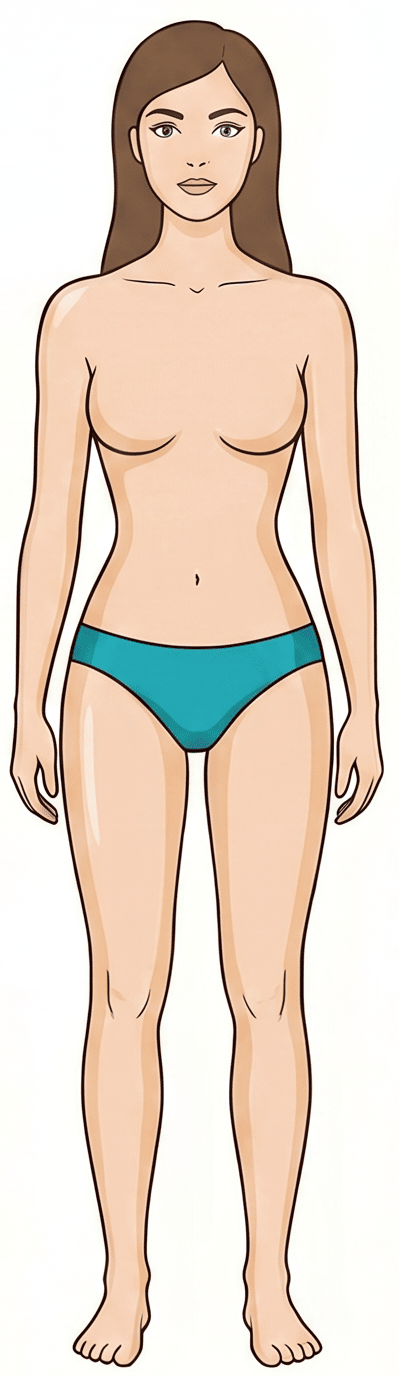
Hourglass
Balanced shoulder and hip width with more visible waist definition.
Upload a full-body photo to detect your body type and get practical guidance based on your visual proportions.
drop a photo here,
By uploading a photo, you agree to our Terms of Service. To learn more about how bodyfatestimator.ai handles your personal data, check our Privacy Policy.
The highlighted row marks your current result from the uploaded image.
| Body Type | Visual Pattern |
|---|---|
Hourglass | Shoulders and hips are similar width with a clearly defined waist. Define and frame the waist while keeping top and bottom balanced. |
Pear (Triangle) | Hips are visually wider than shoulders with a narrower upper torso. Add structure or visual width up top and keep clean lines below. |
Rectangle | Shoulders, waist, and hips read relatively straight with less waist contrast. Create shape through waist definition, layering, and silhouette contrast. |
Inverted Triangle | Shoulders/chest appear broader than hips and lower body. Soften upper width and add balance through lower-body volume/structure. |
Apple (Oval) | Midsection appears fuller relative to shoulders/hips, often with less waist indentation. Use vertical lines and structured drape to simplify the torso silhouette. |
Visual reference cards to help you compare silhouette patterns.
Balanced shoulder and hip width with more visible waist definition.
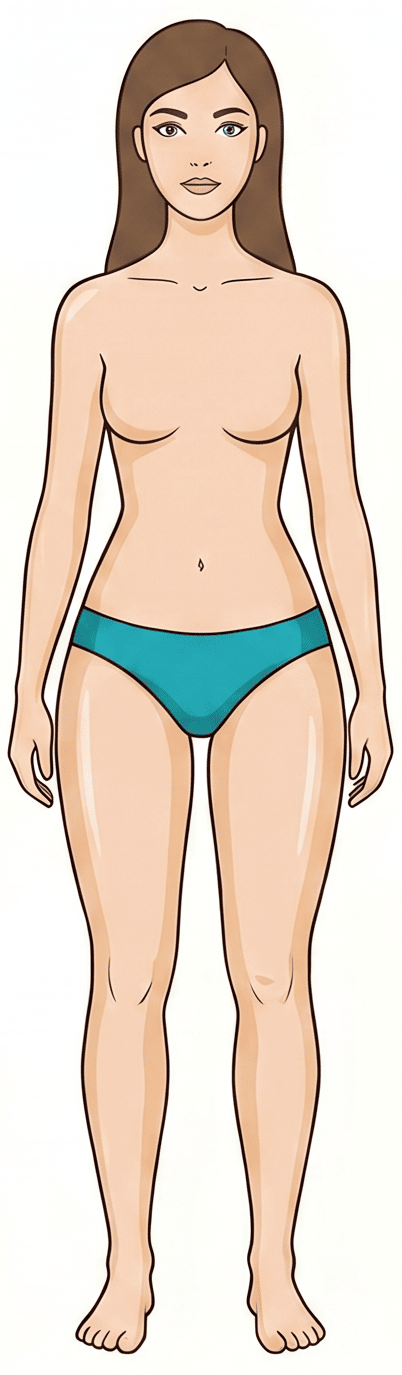
Lower body reads wider than upper body.
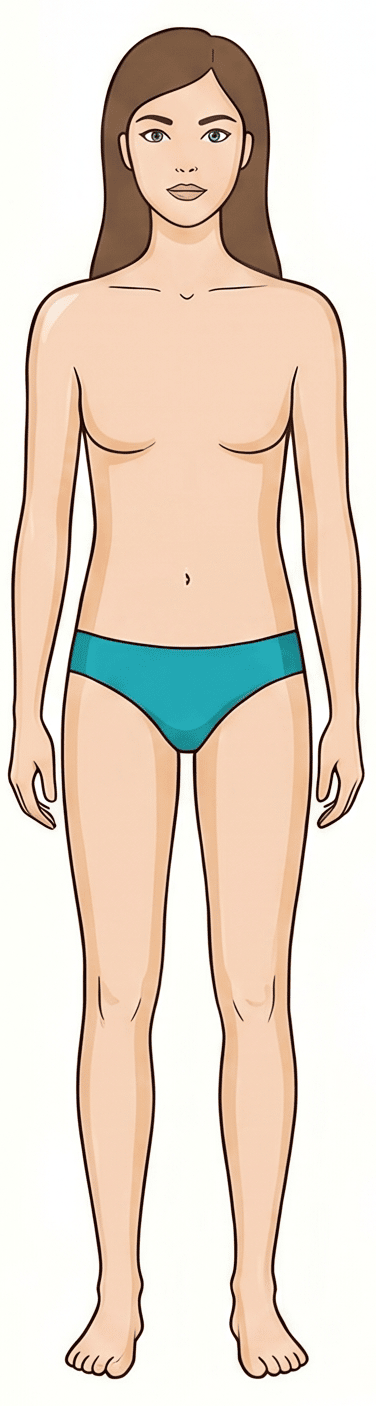
Straighter silhouette with less waist contrast.
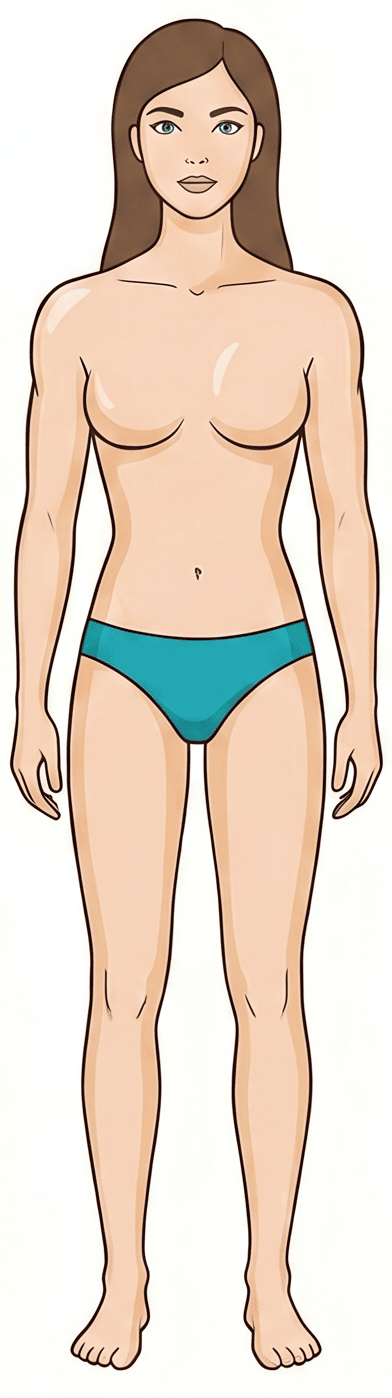
Upper body appears broader than hips.
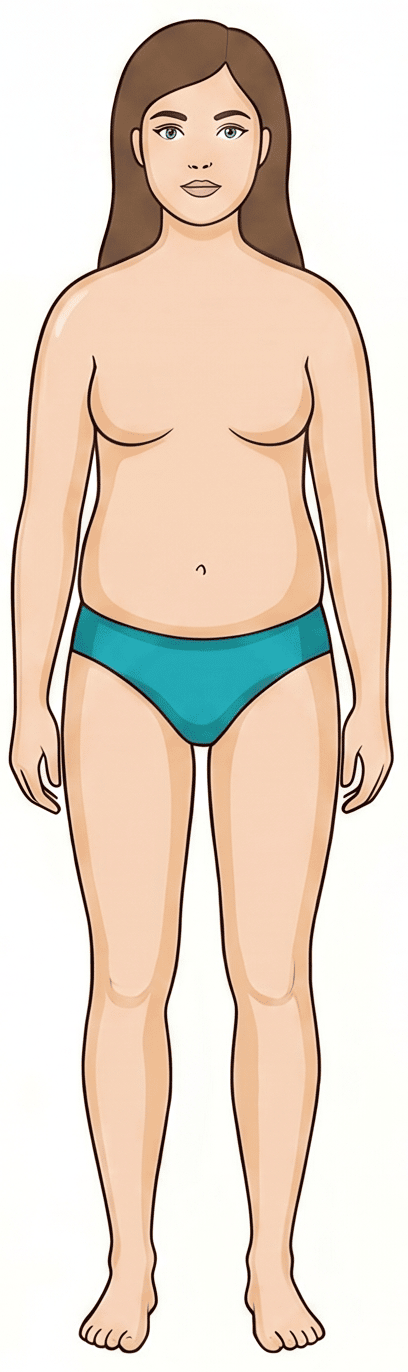
More visual fullness around the midsection.
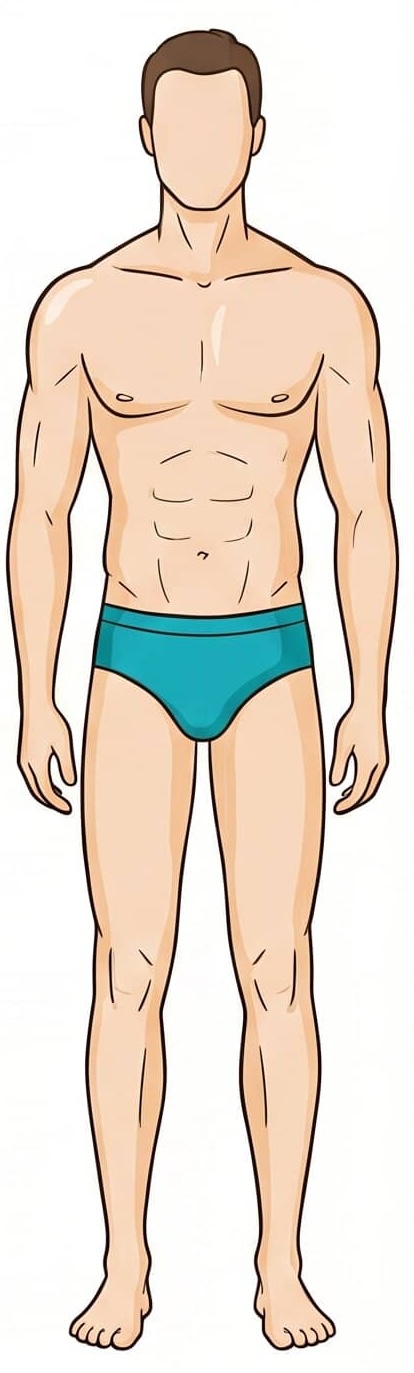
Balanced shoulders and hips with moderate waist taper.
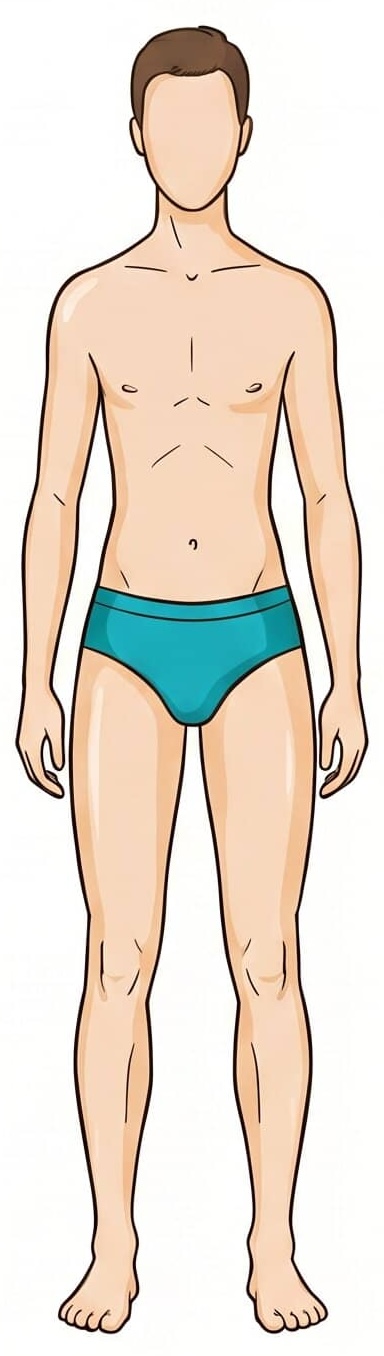
Lower body and waist read wider than upper torso.
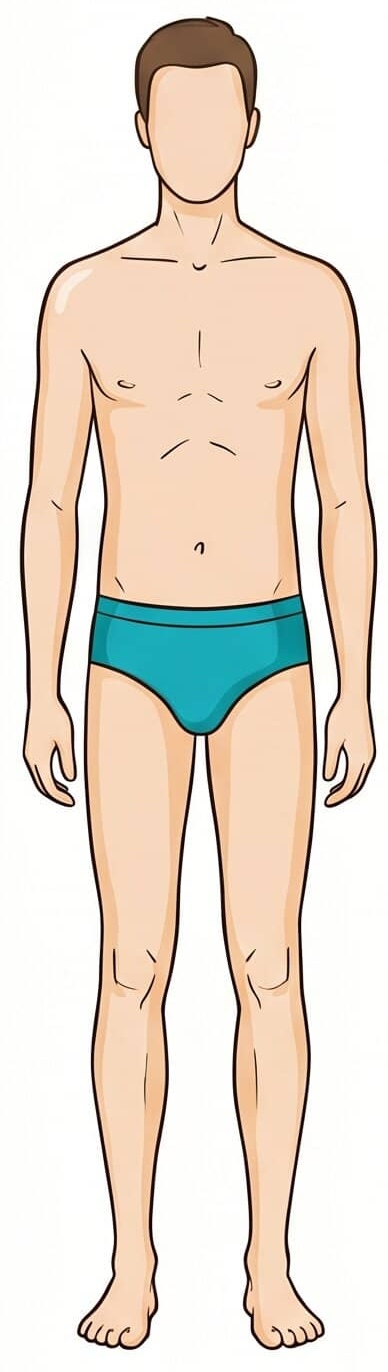
Straight shoulder-to-waist silhouette with less taper.
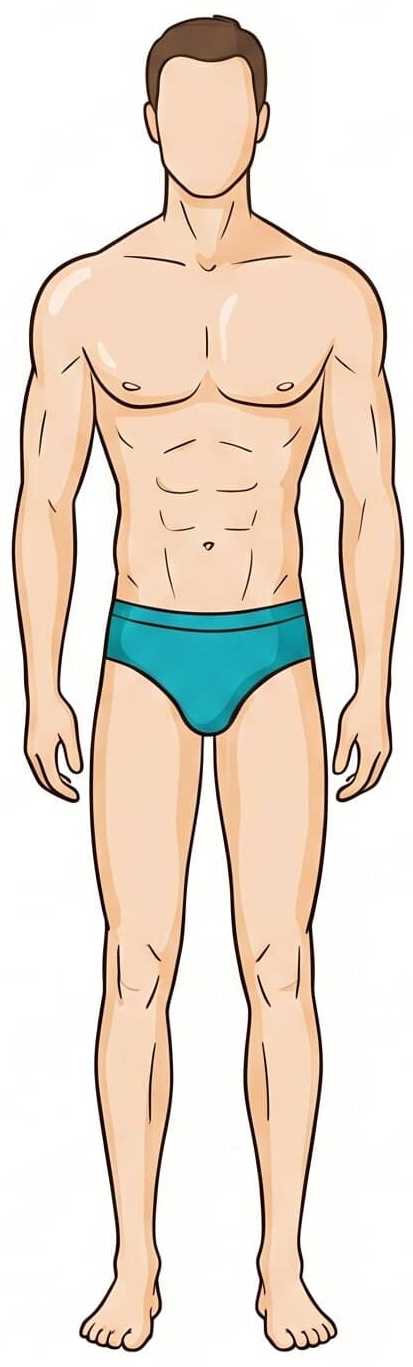
Upper torso appears wider than hips with stronger V-taper.
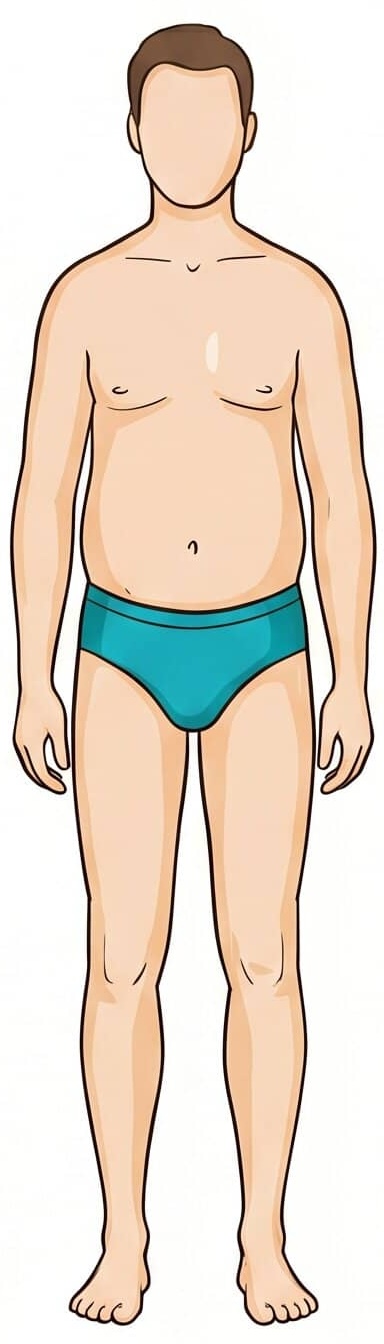
Visual fullness concentrated more in the midsection.
Confidence reflects how clearly your photo matched one dominant body-shape pattern after checking for overlap with alternatives.
Treat this as directional guidance. Lighting, pose, lens choice, and clothing can shift what the model sees, so consistent photo setup matters if you compare multiple scans.
Common questions about photo-based body-shape classification and how to interpret your result.
This tool uses visual proportion cues from your uploaded image to classify your likely body type. The model evaluates upper-body width, waist definition, and hip balance, then maps your silhouette into common categories like hourglass, pear, rectangle, inverted triangle, and apple.
You also get confidence and explanation output so you can understand why the model picked that category.
Prefer a manual method? Use the Body Shape Calculator to estimate body type from bust/chest, waist, and hip measurements.
Upload a full-body photo to detect your body type and get practical guidance based on your visual proportions.
drop a photo here,
By uploading a photo, you agree to our Terms of Service. To learn more about how bodyfatestimator.ai handles your personal data, check our Privacy Policy.
The highlighted row marks your current result from the uploaded image.
| Body Type | Visual Pattern |
|---|---|
Hourglass | Shoulders and hips are similar width with a clearly defined waist. Define and frame the waist while keeping top and bottom balanced. |
Pear (Triangle) | Hips are visually wider than shoulders with a narrower upper torso. Add structure or visual width up top and keep clean lines below. |
Rectangle | Shoulders, waist, and hips read relatively straight with less waist contrast. Create shape through waist definition, layering, and silhouette contrast. |
Inverted Triangle | Shoulders/chest appear broader than hips and lower body. Soften upper width and add balance through lower-body volume/structure. |
Apple (Oval) | Midsection appears fuller relative to shoulders/hips, often with less waist indentation. Use vertical lines and structured drape to simplify the torso silhouette. |
Visual reference cards to help you compare silhouette patterns.
Balanced shoulder and hip width with more visible waist definition.
Lower body reads wider than upper body.
Straighter silhouette with less waist contrast.
Upper body appears broader than hips.
More visual fullness around the midsection.
Balanced shoulders and hips with moderate waist taper.
Lower body and waist read wider than upper torso.
Straight shoulder-to-waist silhouette with less taper.
Upper torso appears wider than hips with stronger V-taper.
Visual fullness concentrated more in the midsection.
Confidence reflects how clearly your photo matched one dominant body-shape pattern after checking for overlap with alternatives.
Treat this as directional guidance. Lighting, pose, lens choice, and clothing can shift what the model sees, so consistent photo setup matters if you compare multiple scans.
Common questions about photo-based body-shape classification and how to interpret your result.
This tool uses visual proportion cues from your uploaded image to classify your likely body type. The model evaluates upper-body width, waist definition, and hip balance, then maps your silhouette into common categories like hourglass, pear, rectangle, inverted triangle, and apple.
You also get confidence and explanation output so you can understand why the model picked that category.
Prefer a manual method? Use the Body Shape Calculator to estimate body type from bust/chest, waist, and hip measurements.
 Body Fat Estimator